
The Taylor County Owner of Record Card
The owner-of-record card is an administrative snapshot. Taylor County's tax portal gives guests access to parcel data, though the exact labels on the live screen can vary. Treat these fields as a checklist. Note each one when it appears rather than assuming every field sits on the same screen. The deed remains the recorded evidence of a transfer.
| Owner name | Name carried on the parcel or assessment roll |
|---|---|
| Mailing address | Where the roll sends tax or property notices |
| Situs address | Physical location associated with the parcel |
| Parcel number | County key that links a tax entry and map |
| Legal description | Land text to compare with a recorded instrument |
| Assessment fields | Land, improvement, and total values when shown |
| Sale or deed reference | Lead for a separate recorded document check |
Never infer a field the card omits. Taylor County's online parcel page offers general land information and states that its data is not guaranteed free of error. Keep the screen date and tax year in your notes.
Open the Taylor County Roll Through Guest Access
The public Taylor County portal opens with its terms. A Guest Sign In area sits beside a separate staff sign-in. Accept the conditions to search parcel data. The page calls its information general. It cannot replace a certified title search. Search by situs address or parcel number first. Then record the exact owner name, municipality, mailing address, parcel key, and legal description that appear. A recent deed may not yet match the roll, since the county publishes no fixed post-closing update interval. Names can differ. Compare document dates and ask Land Information whether its current roll reflects the transfer. The Taylor County Public Portal shows the guest route for parcel information and the current owner field.
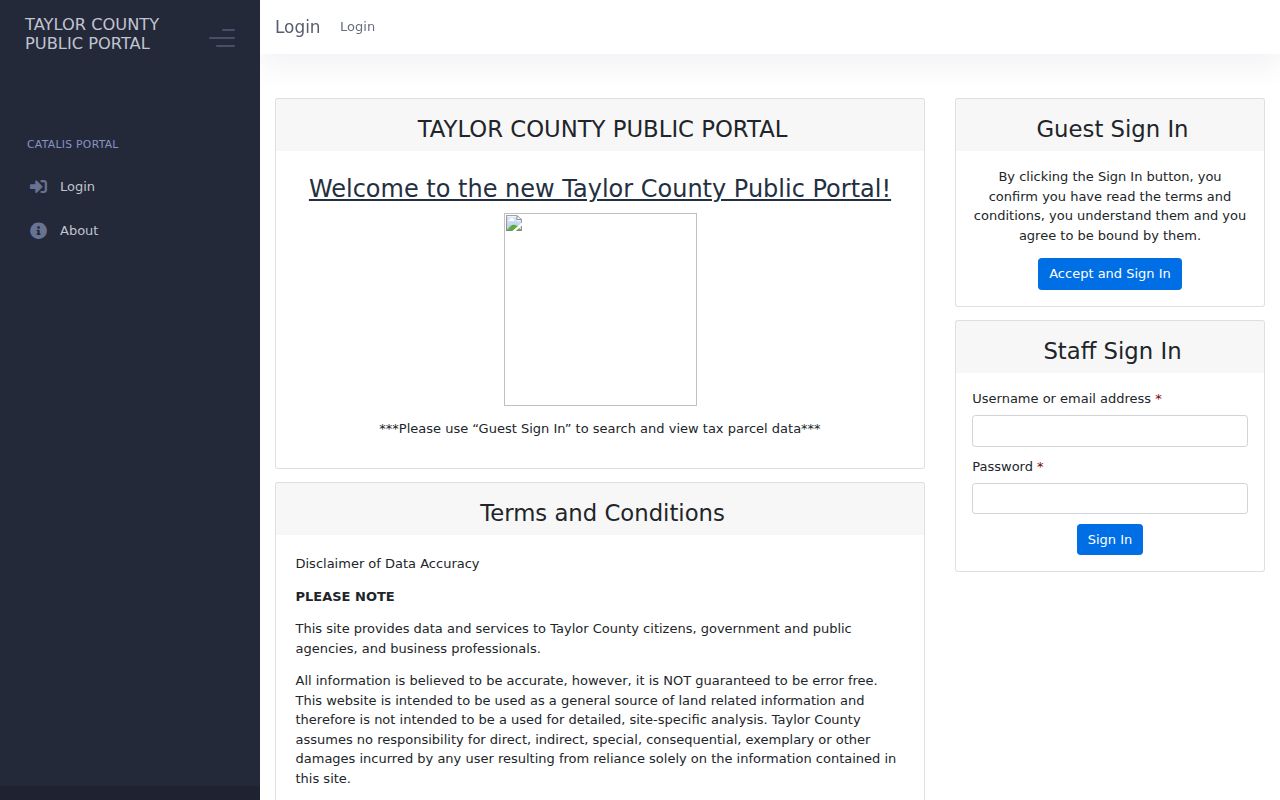
Guest entry opens the roll; the deed confirms ownership.
Current Owner and Taylor County Mailing Address
A situs address identifies the land itself. A mailing address shows where notices go, and it may point to a PO box, agent, lender, business, trust, or an owner outside the county. Neither proves that a person lives there. Keep situs and mailing in separate notes during a Taylor County current owner lookup, so a notice destination never becomes an unsupported claim about residence. Postal labels add another wrinkle. A property near Medford, Rib Lake, or Gilman can carry that city's ZIP while sitting in a different legal municipality, so always note the municipality listed on the Taylor County parcel record. ZIP geography is a postal aid, not proof of a city boundary. For rural or recently changed addresses, the county's Uniform County Address System book may help locate the right parcel. Zoning supplies the book. It also provides Address New and Address Correction forms.
Confirm the Taylor County Current Owner in LandShark
LandShark supplies the recorded-transfer check. Search the current roll name as grantee and inspect the newest matching conveyance. Compare grantor, grantee, recording date, and legal description against the parcel card. The county does not require a Parcel ID. Include party names and the land description along with the number, and try spelling variants or the grantor role if an entry stays hidden. Online real-estate records run from April 1995 forward. The index and the image are separate steps. Occasional users pay the statutory page rate for images. A monthly option serves frequent users. If a current deed image is unavailable online, ask the Register of Deeds at 715-748-1483. The ROD counter sits in the courthouse on South Second Street. For the full address-to-owner method, see the Taylor County owner lookup guide.
Read an Entity Name on a Taylor County Parcel
A current owner field can name an LLC, trust, estate, or personal representative instead of a person. Search the exact entity name in LandShark and compare the legal description. Wisconsin DFI's Corporate Records Search may show a corporation or LLC's status, registered agent, principal office, organization date, and filings. Those are business-record details. They do not reveal who benefits from a trust or prove that a named person holds title to the parcel. Estate property works differently. A probate case may hold an order, inventory, or personal-representative information, while the deed index in Taylor County shows the land transfer itself. The Clerk of Court provides court files. Use each record for its separate purpose. Never rely on the roll name alone.
Watch for New Taylor County Recording Activity
Land Notification is a free county alert service. It emails a link on new matches. The Register of Deeds suggests searching a person or business in several forms and checking both party and parcel concepts when a monitored name or parcel hits a newly recorded instrument. A match is a useful prompt. That helps with trust or company owners. Still, an alert is not proof of a transfer or a title opinion. The Land Notification page describes the public signup and its route back to Taylor County records.
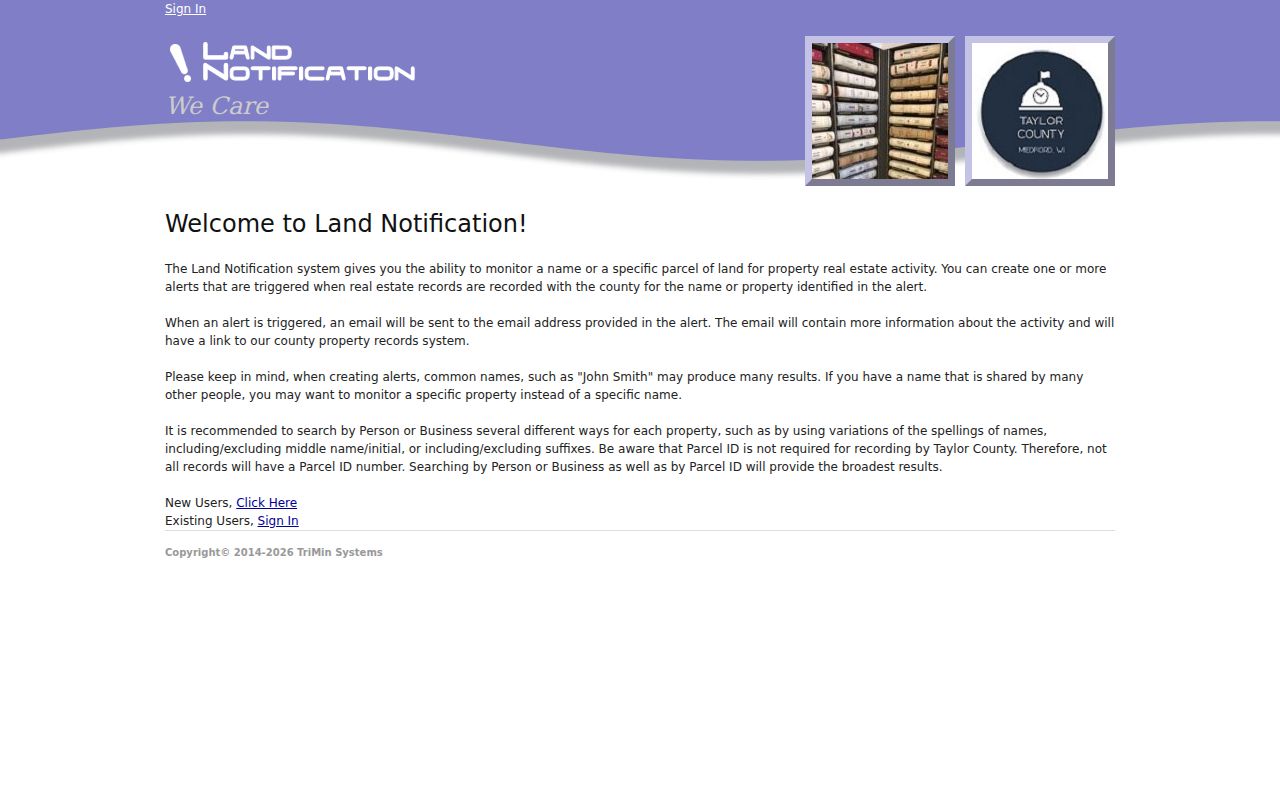
Verify any alert against the deed's parties and legal description.
How Current Is a Taylor County Owner Record?
Nobody can promise an exact lag. Taylor County publishes no fixed interval. Nothing shows how quickly the roll catches up after a closing. The assessor and the Register of Deeds update along separate tracks. So the owner of record in one system can trail the other for a while. The freshest recorded deed is your best proof that a transfer happened. The parcel roll still matters for assessment and the tax bill. But it is not a live title register.
A mismatch calls for comparison, not alarm. Line up the recorded date and the legal description. Add the deed date if the index shows one. Land Information, at 715-748-1465, can tell you whether the roll entry reflects the document yet. Never assume a set number of days has elapsed. Never treat a mismatch as proof that a filing vanished. When you need a formal answer, a title company can search the full chain. It can also surface any other recorded interests.
Limits of the Taylor County Current Owner Search
A Taylor County owner lookup answers one narrow question. It reports the name on a public record, nothing more. That name may not reflect every person holding an interest, and it cannot tell you who actually lives at the parcel. It also proves nothing about liens or other exceptions. For those answers, a deed, an assessor card, a tax bill, and a GIS map each serve a different purpose. Note: always record the source and date beside any owner of record or value you copy.
Use the right evidence. The Taylor County roll is not a title opinion. Confirm transfers with the Register of Deeds and seek a title professional when legal certainty matters.
A Court Search Is a Lead, Not Proof of Ownership
Litigation records can point toward a dispute, but they settle nothing about title. The Wisconsin Court System's public case-search page helps locate cases tied to a person or parcel in Taylor County. A listing there does not establish who currently holds the deed. Treat any judgment or foreclosure result as a lead. Confirm it against the recorded instrument and the county deed records before drawing conclusions. The Wisconsin Court System case-search page provides the statewide public lookup route.
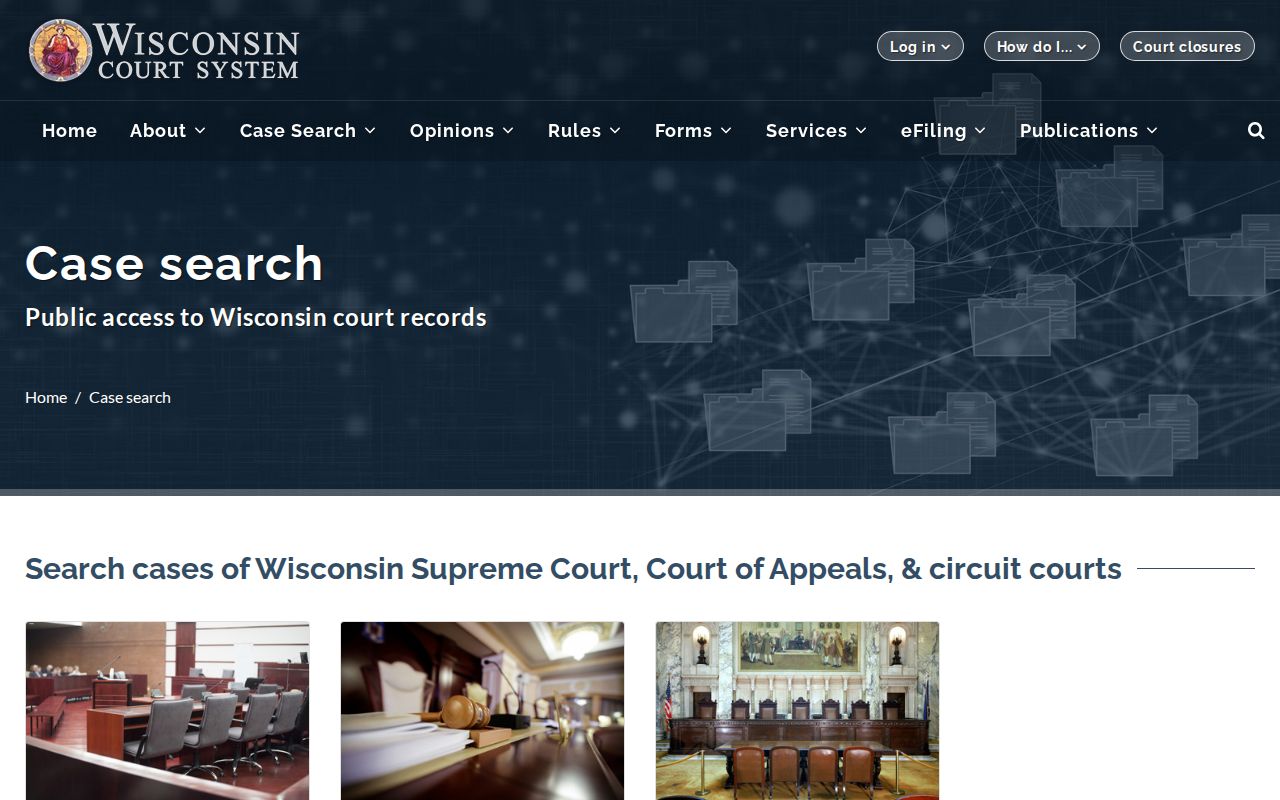
A case result is a pointer, not a title record. Take it to the clerk and the Register of Deeds to verify any real effect on the parcel. It never replaces a proper title search or a current owner of record lookup in the Taylor County property records.